If you’re planning to renovate your home—whether it’s a kitchen upgrade, roof repair, or a full remodel—understanding home improvement loans interest rates is one of the most important steps before borrowing. The interest rate you secure will directly impact how much you pay over time, your monthly repayments, and ultimately whether the project is financially worth it.
This comprehensive guide breaks down everything you need to know about home improvement loan interest rates, including current trends, factors that affect rates, types of loans, how to get the lowest rates, and answers to common questions.
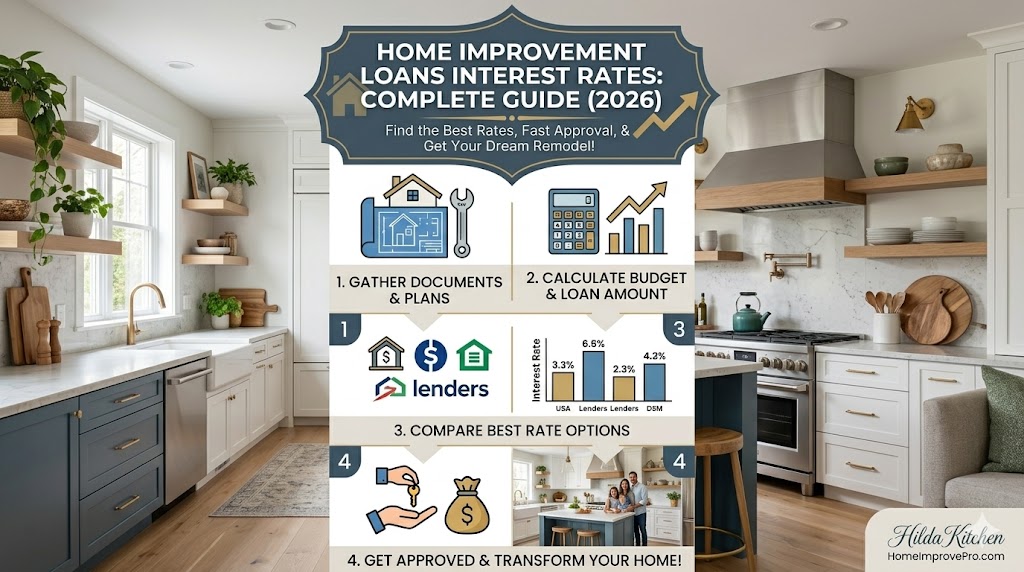
What Are Home Improvement Loans?
Home improvement loans are financing options designed to help homeowners pay for renovations, repairs, or upgrades. These loans can be secured or unsecured, depending on the lender and loan type.
Common uses include:
- Kitchen or bathroom remodeling
- Roof replacement
- HVAC system upgrades
- Home extensions
- Energy-efficient improvements
Current Home Improvement Loan Interest Rates (2026)
Interest rates for home improvement loans vary widely depending on the type of loan and borrower profile. As of 2026, here’s a general range:
| Loan Type | Interest Rate Range |
|---|---|
| Personal Loans | 6% – 36% |
| Home Equity Loans | 5% – 12% |
| HELOCs | 6% – 13% (variable) |
| Cash-Out Refinance | 5% – 10% |
| Credit Cards | 15% – 30% |
💡 Key Insight: Secured loans (like home equity loans) typically have lower interest rates than unsecured loans (like personal loans).
Types of Home Improvement Loans and Their Interest Rates
1. Personal Loans for Home Improvement
Personal loans are unsecured, meaning you don’t need to use your home as collateral.
Interest Rates: 6% – 36%
Pros:
- Fast approval
- No collateral required
- Fixed interest rates
Cons:
- Higher interest rates for low credit scores
- Lower borrowing limits
👉 Best for small to medium projects.
2. Home Equity Loans
A home equity loan allows you to borrow against the value of your home.
Interest Rates: 5% – 12%
Pros:
- Lower rates than personal loans
- Fixed monthly payments
- Larger loan amounts
Cons:
- Risk of losing your home if you default
- Requires sufficient home equity
👉 Best for large renovation projects.
3. Home Equity Line of Credit (HELOC)
A HELOC works like a credit card, allowing you to borrow as needed.
Interest Rates: 6% – 13% (variable)
Pros:
- Flexible borrowing
- Pay interest only on what you use
Cons:
- Variable rates can increase
- Requires discipline in spending
👉 Best for ongoing or phased projects.
4. Cash-Out Refinance
This replaces your existing mortgage with a new, larger one, and you take the difference in cash.
Interest Rates: 5% – 10%
Pros:
- Lower rates compared to personal loans
- Consolidates debt
Cons:
- Closing costs
- Extends mortgage term
👉 Best for major renovations and when mortgage rates are favorable.
5. Credit Cards
Using a credit card is an option for smaller projects.
Interest Rates: 15% – 30%
Pros:
- Immediate access
- Rewards or cashback
Cons:
- Very high interest rates
- Risk of debt accumulation
👉 Best for minor repairs or short-term financing.
Factors That Affect Home Improvement Loan Interest Rates
Understanding what influences your interest rate can help you secure a better deal.
1. Credit Score
Your credit score is the biggest factor.
- Excellent (750+): Lowest rates
- Good (700–749): Competitive rates
- Fair (650–699): Moderate rates
- Poor (<650): High rates
💡 Tip: Improve your credit score before applying.
2. Loan Type
Secured loans generally offer lower interest rates because they reduce lender risk.
3. Loan Amount
Higher loan amounts may come with lower rates, especially for secured loans.
4. Loan Term
- Short-term loans → Lower total interest but higher monthly payments
- Long-term loans → Higher total interest but lower monthly payments
5. Income and Debt-to-Income Ratio (DTI)
Lenders assess your ability to repay:
- Lower DTI = Lower risk = Better rates
6. Market Conditions
Interest rates fluctuate based on:
- Inflation
- Central bank policies
- Economic trends
Fixed vs Variable Interest Rates
Fixed Interest Rates
- Stay the same throughout the loan term
- Predictable payments
Variable Interest Rates
- Change over time
- May start lower but can increase
💡 Recommendation: Choose fixed rates for stability unless you expect rates to drop.
Also read: Zions Bank Student Loans: What Borrowers Need to Know Before Applying
How to Get the Lowest Home Improvement Loan Interest Rates
Getting a low interest rate can save you thousands over time. Here’s how:
1. Improve Your Credit Score
- Pay bills on time
- Reduce credit card balances
- Avoid new debt before applying
2. Shop Around
Compare offers from:
- Banks
- Credit unions
- Online lenders
Even a 1% difference can significantly impact your total cost.
3. Choose Secured Loans
If you have equity in your home, consider:
- Home equity loans
- HELOCs
These typically offer lower rates.
4. Opt for Shorter Loan Terms
Shorter terms usually come with:
- Lower interest rates
- Less total interest paid
5. Negotiate With Lenders
Many borrowers don’t realize interest rates can sometimes be negotiated, especially if you have strong financials.
6. Consider Timing
Apply when:
- Market rates are low
- Your financial profile is strong
Hidden Costs to Watch Out For
Interest rates aren’t the only cost. Look for:
- Origination fees
- Closing costs
- Prepayment penalties
- Late payment fees
Always calculate the APR (Annual Percentage Rate), which includes these costs.
Pros and Cons of Home Improvement Loans
Pros
✔ Enables immediate renovations
✔ Increases home value
✔ Flexible financing options
Cons
✘ Interest costs
✘ Risk of debt
✘ Potential foreclosure (secured loans)
Are Home Improvement Loans Worth It?
Home improvement loans can be worth it if:
- The renovation increases property value
- You secure a low interest rate
- You have a clear repayment plan
They may not be ideal if:
- Interest rates are too high
- The project is non-essential
- Your financial situation is unstable
Tips for Choosing the Right Loan
- Define your budget clearly
- Compare at least 3 lenders
- Understand total repayment cost
- Avoid borrowing more than needed
- Read the fine print carefully
FAQs on Home Improvement Loan Interest Rates
1. What is a good interest rate for a home improvement loan?
A good rate typically falls between 5% and 10%, depending on your credit score and loan type.
2. Can I get a home improvement loan with bad credit?
Yes, but expect higher interest rates (20%+). Consider improving your credit before applying.
3. Are home improvement loan interest rates fixed?
Some are fixed (personal loans, home equity loans), while others are variable (HELOCs).
4. Which loan has the lowest interest rate?
Home equity loans and cash-out refinancing usually offer the lowest rates because they are secured.
5. How can I reduce my loan interest rate?
- Improve your credit score
- Choose a secured loan
- Shop around
- Opt for shorter terms
6. Do home improvement loans affect credit score?
Yes. Applying may cause a small temporary drop, but consistent repayments can improve your score.
7. Is it better to use savings or a loan?
- Use savings if you can afford it without financial strain
- Use a loan if you want to preserve cash flow or handle large expenses
Final Thoughts
Understanding home improvement loans interest rates is essential before starting any renovation project. The type of loan you choose, your credit profile, and current market conditions all play a major role in determining how much you’ll pay.
For most homeowners:
- Secured loans offer the best rates
- Good credit unlocks the lowest interest options
- Careful comparison leads to better deals
Before committing, always calculate the total cost—not just the monthly payment—and ensure the investment aligns with your financial goals.